 June 15, 2026
 Industrial automation has relied on familiar communication protocols for decades. OPC UA, Modbus, EtherNet/IP, PROFINET, and MQTT were all created to move values efficiently, expose tags, and support deterministic control on the plant floor. For many years, that was enough. When systems only needed to exchange raw data, these protocols handled the job without much trouble.
That environment has changed. Plants now depend on MES platforms, historians, analytics tools, custom applications, and a growing set of AI driven systems. All of these tools pull from the same operational data, but they also need a clearer sense of what that data represents and what actions they are allowed to take. Tasks like reading data, recording events, or running an operation all depend on the context that older protocols were never designed to carry. That is where things start to fall apart. Systems can move data, but they do not share a common understanding of what that data means.
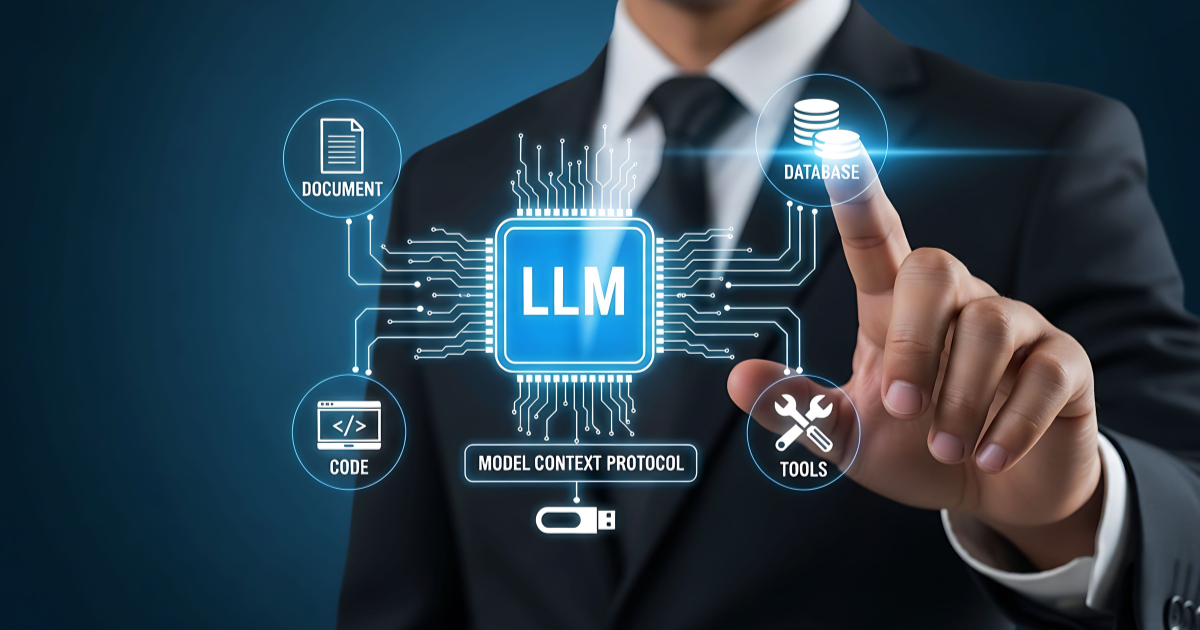
The Model Context Protocol, or MCP, is meant to close that gap. It gives software a consistent way to discover system capabilities, understand the surrounding context, and interact with industrial systems without any guesswork.
What MCP Is and What It Is Not
MCP is not a replacement for PLCs, OPC UA servers, MQTT brokers, or any of the systems responsible for real time control and data movement. Those technologies continue to do the work they were built for. MCP sits above them and provides a structured way for software to understand what a system can do and under what conditions those capabilities should be used.
In practice, MCP helps software answer three questions. It identifies the tools or functions a system exposes, such as reporting interfaces, databases, or dashboards. It describes the data each tool provides or requires, including production counts, machine states, or quality metrics. It also outlines the rules that govern interactions, such as prerequisites for submitting an event or limits on when an operation may run.
With this structure in place, applications no longer need hard coded paths, custom scripts, or undocumented logic. Instead of guessing how to interact with a system, software can look up the operations that exist and understand how they behave. MCP does not expose raw tags or database tables. It exposes intent, which allows consuming systems to understand not only what information exists but how it is meant to be used.
Why Traditional Industrial Protocols Fall Short
Industrial protocols excel at delivering values reliably and on time. They were built for deterministic control, not for describing the meaning or intended use of the information they carry. A tag might represent a counter, a state, or a calculated value, but higher-level systems have no reliable way to tell the difference.
This limitation becomes more visible as software systems attempt to do more than read values. MES platforms, historians, analytics tools, and AI applications often need to submit events, request summaries, or execute defined operations. Traditional protocols do not provide a structured way to expose these capabilities. They offer access to tags or tables, but they do not describe which operations exist, what inputs those operations expect, or what constraints apply.
Many organizations end up filling the gaps with quick scripts or direct database queries, and over time that logic spreads across several applications. It works for a while, but it becomes a maintenance problem as equipment changes or the people who wrote those scripts move on. MCP offers a cleaner path by exposing operations through defined API endpoints rather than relying on raw tag reads.
Where MCP Fits in the Stack
You can think about the architecture in layers, each one taking care of a different part of the job. At the lowest level, PLC protocols manage control. Above that, technologies like OPC UA and MQTT move data between systems. MCP sits on top of those layers and focuses on describing context and the capabilities a system is willing to expose.
When these roles are separated, higher level software does not need to guess at tag names, database tables, or workflow logic just to interact with plant systems. MCP gives that software a clear description of the operations a system offers, the inputs those operations expect, and any limits that apply. With that information in place, applications can interact with industrial systems through stable, documented interfaces instead of relying on custom scripts or direct database access.
Why AI Made the Problem Obvious
AI did not create the need for MCP, but it exposed the limits of traditional protocols in a very direct way. Models cannot guess what a tag represents or which operations a system supports, so the lack of context becomes a real barrier. MCP fills that gap by giving software the structure it needs to work with industrial systems in a reliable way.
With MCP in place, it becomes much easier to compare how different products or shifts perform because the underlying definitions are consistent across the board. Everyone is looking at the same information in the same way.
MCP is not a shortcut. It still depends on solid data models and clear ownership, and it works best when the engineering work behind those systems is steady and well supported. The protocol gives systems a clear view of the operations that are available and the inputs those operations expect, and it provides an API layer that keeps those interactions steady and well documented. It also encourages teams to align their data models and responsibilities so the information flowing through the system stays coherent.
What MCP Enables in Practice
When implemented correctly, MCP supports interactions that are difficult or brittle today. It gives systems a straightforward way to see which operations exist and what they require, and it lets applications call those operations through APIs that hold up better than the usual script-based workarounds. It also encourages consistent data models, clearer ownership, and more reliable engineering practices.
MCP does not replace existing systems. It makes them more usable, more predictable, and easier to integrate.
Why MCP Matters Long Term
As plants continue adding software systems, the old pattern of one-off integrations and undocumented assumptions becomes harder to sustain. MCP offers a more scalable alternative by giving every system a consistent way to describe what it can do and how it should be used. AI only becomes useful when the data behind it makes sense. If the information reflects how the plant actually runs, those systems can pick up patterns, call out issues, and point to changes that might help. When data movement is paired with that level of clarity, MCP supports industrial architectures that are easier to maintain and better prepared for whatever comes next.

 November 18, 2025