 June 20, 2026
 Key Takeaways
- Life science automation supports compliance, traceability, and data integrity in regulated manufacturing environments
- MES integration provides real-time visibility and control across pharmaceutical production processes
- Electronic batch records reduce human error and improve audit readiness
- Automation improves efficiency while reducing manual intervention in critical workflows
- Environmental monitoring systems help maintain validated production conditions
- Digital transformation is accelerating through AI, machine learning, and agentic automation
- Modern automation strategies help life sciences companies reduce time-to-market and support innovation
Pharmaceutical and biotech manufacturing operates under some of the most stringent regulatory and quality requirements in the world. Unlike other industries, life science automation must support validated processes, strict documentation standards, and full traceability across every stage of production.
Furthermore, demand across the life sciences industry continues to grow. Global spending on medicines is projected to reach approximately $2.3 trillion by 2028, while life sciences organizations continue to increase investment in automation, data, and digital technologies to improve research productivity and innovation.
For life sciences organizations, this means automation is not just about speed or cost reduction. It is about maintaining data integrity, reducing human error, and confirming compliance with FDA regulations such as 21 CFR Part 11.
As product pipelines grow more complex and time-to-market pressures increase, the need for scalable and compliant automation solutions continues to expand.
Modern life sciences companies are also balancing innovation with operational consistency. Whether supporting biologics, pharmaceuticals, or medical device production, automation must adapt to evolving process requirements while maintaining validated control.
Industrial Automation for Pharmaceutical Manufacturing
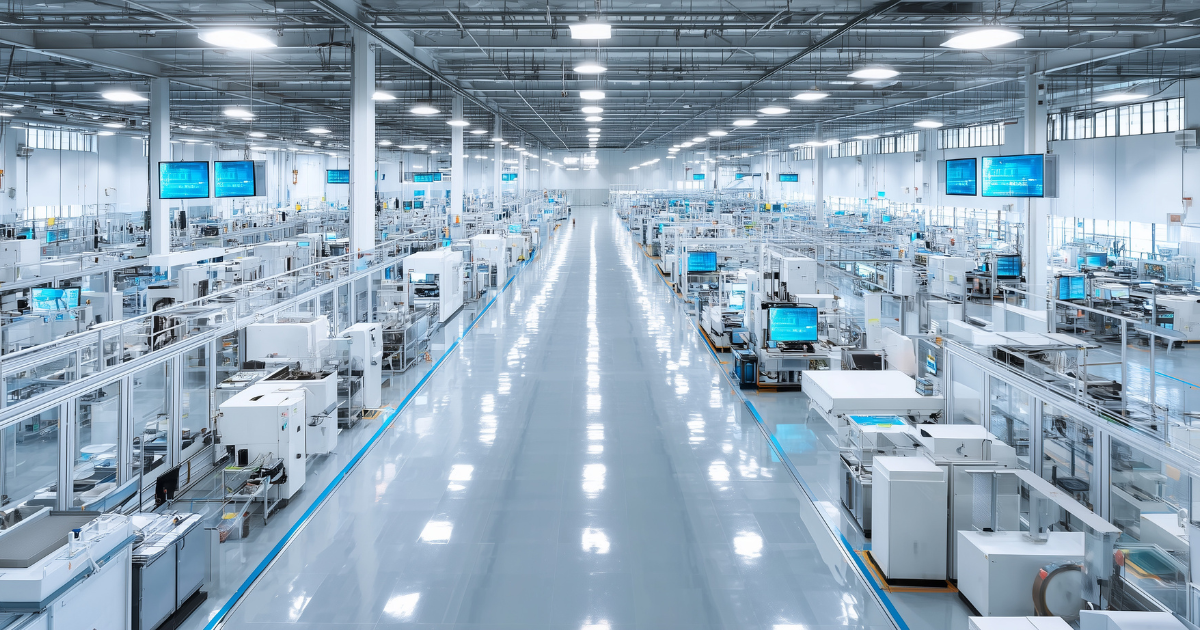
Pharmaceutical manufacturing automation relies on tightly integrated control systems that manage production environments, equipment, and workflows. These systems help reduce manual intervention, improve repeatability, and create consistent product outcomes.
Key components of industrial automation in pharmaceutical environments include:
- Process control systems for batch and continuous manufacturing
- SCADA platforms for real-time monitoring and control
- Integration with upstream and downstream equipment
- Data collection systems for regulatory reporting
By implementing advanced pharmaceutical automation systems, manufacturers can improve efficiency while maintaining strict compliance standards. Automation also enables facilities to scale production without compromising quality, helping them meet growing global demand.
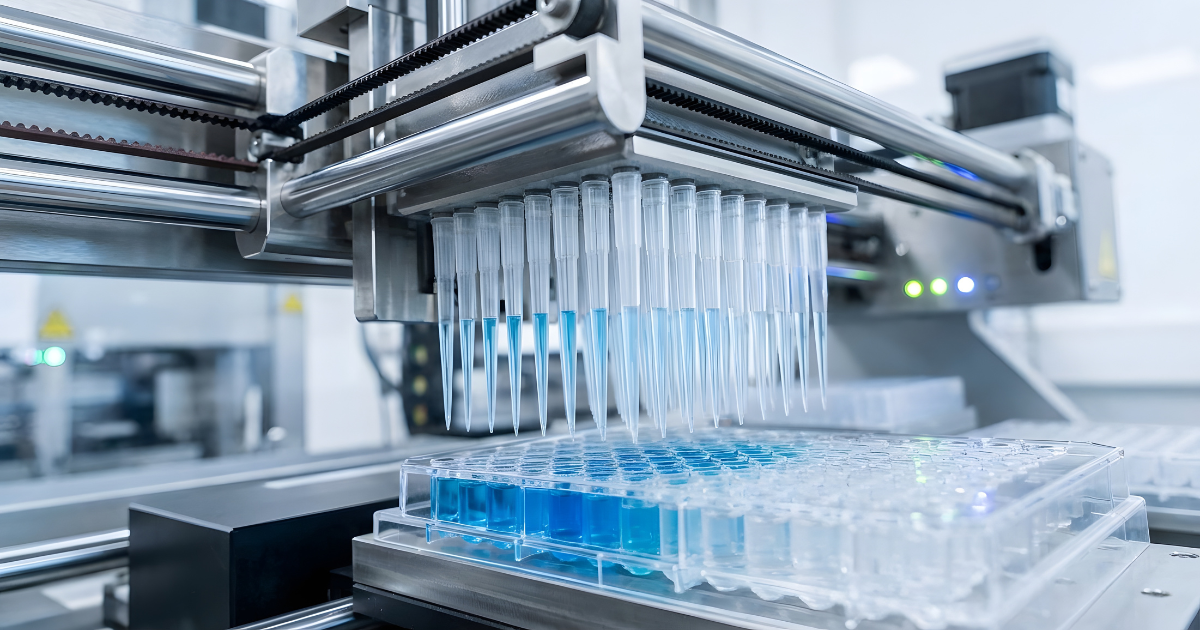
In addition, automation supports research and development environments, where laboratory automation and high-throughput screening technologies accelerate experimentation and data collection. These tools allow teams to analyze large volumes of data quickly, helping organizations move promising therapies forward faster.
MES Integration in Life Science Manufacturing
A Manufacturing Enterprise System (MES) plays a central role in modern life science automation strategies. MES life sciences platforms connect production systems with enterprise-level operations, creating a unified view of manufacturing performance.
MES system integration allows manufacturers to:
- Track production in real time
- Manage workflows and batch execution
- Capture and store critical production data
- Enforce standard operating procedures
- Improve visibility across facilities
With integrated MES platforms, life sciences organizations gain better control over production processes while reducing reliance on paper-based systems. This leads to improved efficiency, faster decision-making, and stronger compliance outcomes.
As digital transformation continues, MES platforms are increasingly incorporating artificial intelligence and machine learning capabilities to analyze production data, identify trends, and support predictive decision-making.
Electronic Batch Records and Digital Compliance
One of the most impactful applications of automation in life sciences is the implementation of electronic batch records (EBR). Traditional paper-based batch records are time-consuming, error-prone, and difficult to audit.
A single biotech batch record can include between 5,000 and 45,000 manual data entries, creating a significant opportunity for errors and inconsistencies. At the same time, pharmaceutical teams may spend up to 30% of their time on documentation-related activities (per McKinsey).
Electronic systems provide:
- Real-time data capture and validation
- Automated workflow enforcement
- Improved traceability and audit readiness
- Reduced risk of documentation errors
By minimizing manual intervention, EBR systems help reduce human error while improving data accuracy. This supports faster batch release and a shorter time-to-market, which is critical for competitive positioning in the life sciences industry.
Digital compliance also extends to data integrity, where secure and validated systems ensure that production data remains accurate, complete, and accessible throughout the product lifecycle.
Process Expertise in Life Science Automation
Successful life science automation requires deep process understanding. Each pharmaceutical or biotech application has unique requirements, from sterile processing environments to complex multi-step batch operations.
Experienced manufacturing automation consulting services providers bring:
- Knowledge of regulated manufacturing environments
- Understanding of validation and compliance requirements
- Experience with diverse process types
- Ability to align automation with operational goals
This process-driven approach allows life sciences companies to implement automation strategies that support both current operations and future growth.
Environmental Monitoring Systems in Pharmaceutical Facilities
Environmental monitoring is a critical component of pharmaceutical manufacturing. Facilities must maintain strict control over temperature, humidity, air quality, and particulate levels to meet regulatory standards.
Automated environmental monitoring systems provide:
- Continuous data collection and logging
- Real-time alerts for deviations
- Integration with facility control systems
- Historical data for audits and compliance
These systems play a vital role in protecting product quality and making sure that manufacturing environments remain within validated conditions. As life science automation evolves, environmental monitoring is increasingly integrated with broader facility systems, enabling centralized control and improved visibility across operations.
Example: Pharmaceutical Control System Modernization
Many pharmaceutical manufacturers operate legacy control systems that limit visibility, flexibility, and scalability. Modernization efforts focus on upgrading these systems to support digital transformation initiatives.
A typical modernization project may include:
- Replacing outdated control hardware and software
- Integrating systems with MES platforms
- Improving data collection and reporting capabilities
- Enhancing system reliability and performance
These upgrades enable manufacturers to better support innovation, improve efficiency, and prepare for future automation initiatives, including advanced analytics and agentic automation.
Why Life Science Manufacturers Choose NeoMatrix
At NeoMatrix, we provide industrial automation consulting and implementation services custom-designed to meet the needs of the life sciences industry. Their approach focuses on delivering practical, compliant, and scalable automation solutions.
1) Aligning Automation with Business Goals
NeoMatrix works closely with each client to develop automation strategies that support both immediate operational needs and long-term business objectives.
2) Improving Production Visibility and Data Utilization
By integrating systems and streamlining data flow, NeoMatrix helps manufacturers gain clearer insight into production performance and make more informed decisions.
3) Supporting Compliance and Validation Efforts
With a strong understanding of regulated environments, NeoMatrix designs automation solutions that align with validation requirements and support consistent regulatory compliance.
4) Enhancing Operational Performance Across Facilities
From system upgrades to full-scale integration, NeoMatrix helps improve reliability, consistency, and overall performance across manufacturing operations.
Their experience in pharmaceutical manufacturing automation and MES integration positions them as a trusted partner for organizations seeking to modernize their operations.
Experience Across the Life Science Industry
NeoMatrix supports a wide range of life science applications, including:
- Pharmaceutical manufacturing
- Biotech production environments
- Medical device manufacturing
- Laboratory and research facilities
This cross-industry experience allows us to bring best practices and proven approaches to each project while adapting to the distinct needs. From laboratory automation to full-scale production systems, we help organizations implement solutions that support both operational excellence and regulatory compliance.
Future of Digital Life Science Manufacturing
The future of life science automation is being shaped by emerging technologies and increasing data integration. As facilities become more connected, manufacturers are leveraging advanced tools to drive better outcomes.
Key trends include:
- Greater use of artificial intelligence and machine learning for data analysis
- Expansion of agentic automation to support autonomous decision-making
- Increased adoption of digital twins and predictive analytics
- Enhanced integration between MES, ERP, and control systems
These advancements are helping life sciences companies reduce time-to-market, improve product quality, and accelerate innovation.
At the same time, automation is supporting broader goals such as improved patient engagement and faster delivery of new therapies to market.
FAQs About Life Science Automation
1) What is life science automation?
Life science automation uses integrated systems and software to manage pharmaceutical, biotech, and medical device manufacturing while maintaining compliance and data integrity.
2) How does MES integration support pharmaceutical manufacturing?
MES connects production systems with enterprise operations, enabling real-time tracking, standardized workflows, and accurate data collection.
3) What are electronic batch records (EBR)?
Electronic batch records replace paper documentation with digital systems that capture production data in real time, improving accuracy and audit readiness.
4) Why is automation used in life sciences?
Automation reduces manual intervention, limits human error, and helps manufacturers meet regulatory requirements while improving efficiency.
5) What types of facilities use life science automation?
Pharmaceutical plants, biotech labs, medical device manufacturers, and research facilities all use automation to manage processes and data.
6) How does automation impact time to market?
Automation speeds up production, reduces delays caused by errors or rework, and enables faster product release timelines.
Schedule a Life Science Automation Consultation
Pharmaceutical manufacturing isn’t slowing down, and neither are the expectations around compliance, data integrity, and performance. Your automation strategy needs to keep up.
At NeoMatrix, we work alongside life sciences organizations across the United States to design and implement automation solutions that actually fit how your facility operates. From MES integration to electronic batch records and control system modernization, our team brings the technical depth and process understanding needed to move projects forward.
If you’re looking to reduce manual intervention, improve data visibility, or modernize legacy systems, we’re ready to help.
Schedule a consultation with our team to start a conversation about where your operation is today, and where it can go next.
 June 29, 2026